Colly Birds, Turtle Doves, and the Carol That Gaslights Your Memory
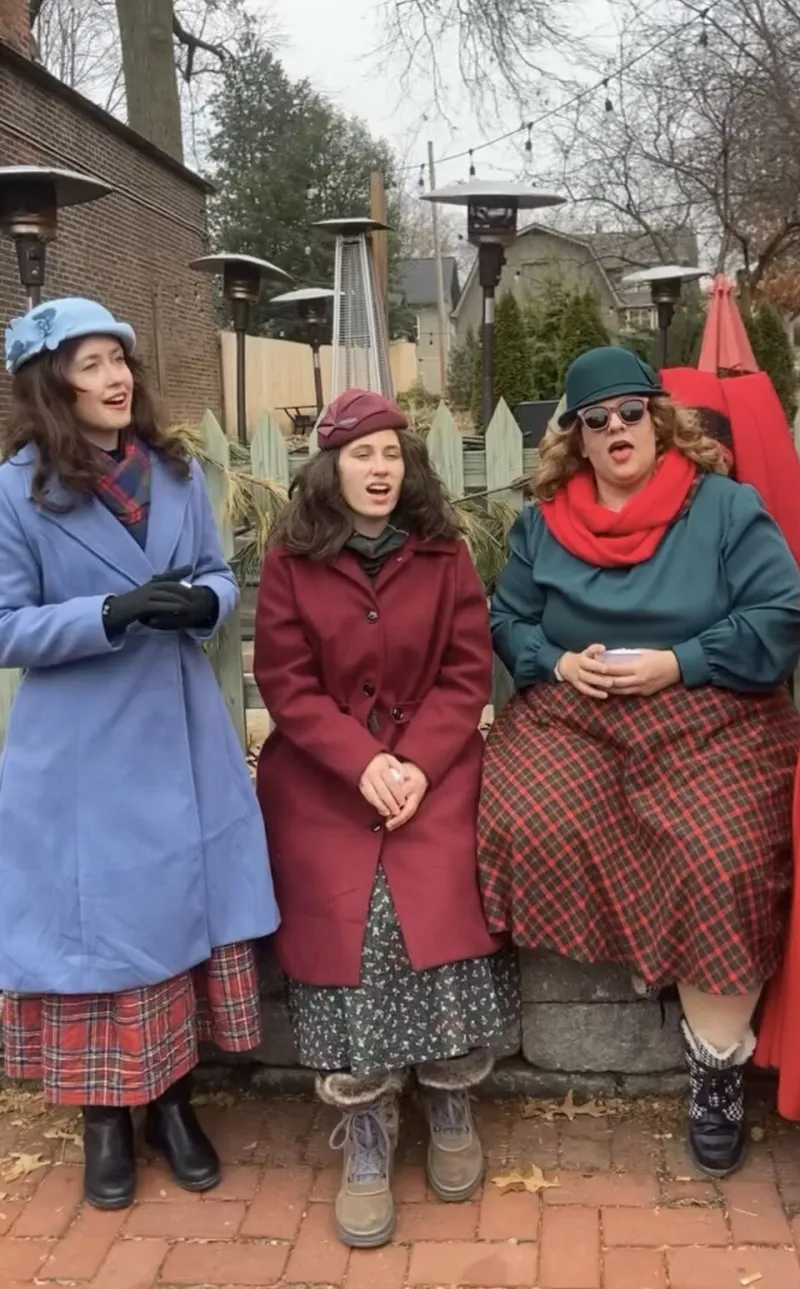
Photo: Catboy69, CC0, via Wikimedia Commons
Every December, America agrees to sing a song it does not fully understand. The mall speakers pipe it in. The school winter concert belts it out. Your uncle hums the part about the lords and then confidently invents a verse about eleven accountants auditing. And somewhere around the fourth gift, the whole room sings 'four calling birds' like it is a fact carved into a candy cane.
Except the older versions usually do not say 'calling birds.' They say 'colly birds.' And that is where the fun starts.
A Carol With a Typo Problem
The '12 Days of Christmas' is a cumulative song, which means it is built for memory games, group singing, and increasingly desperate hand gestures. That format is also a word-scrambling machine. When a phrase is repeated twelve times by people who may not know what it means, it tends to drift toward whatever sounds familiar. 'Colly' is obscure. 'Calling' is not. So the carol did what language always does: it sanded down the weird part and kept the tune.
This is not a story about one massive error. It is a story about many small, human substitutions. The song has been printed, reprinted, parodied, and performed for centuries. Every version is a little archaeological site.
What the Heck Is a Colly Bird?
'Colly' is an old English dialect word meaning black or coal-dark. It survives in compounds and regional speech, and it shows up in bird names. A colly bird is generally understood to be a blackbird. Not a bird that calls. Not a bird with a phone plan. A black bird, probably the common blackbird, with a name that sounds like soot.
In early printed versions of the carol, the fourth gift is often 'colly birds.' Later versions replace it with 'calling birds,' which gives us the image of four birds singing out—pleasant, but historically suspect. The shift makes sense. If you are a singer in the 1800s and you have never heard 'colly' outside this one song, you are going to reach for the nearest word that fits the meter and the melody.
So the next time you sing 'four calling birds,' you are not exactly wrong. You are just participating in a centuries-long game of telephone with a blackbird at the other end.
Turtle Doves Are Not Turtles
This is the one that trips up perfectly reasonable adults. A turtle dove has nothing to do with a shell, a slow walk, or a reptile. The 'turtle' here comes from the Latin 'turtur,' which is imitative of the bird's soft cooing sound. Old English had 'turtur' or 'turtle' for the bird, and the name stuck.
The turtle dove is a real species, smaller and duskier than the familiar mourning dove, and it has a long literary career as a symbol of devoted love. In the carol, two turtle doves are a pair—cute, romantic, and phonetically confusing. If you have ever pictured a dove wearing a tiny turtle shell, you are not alone. You are just wrong in a very charming way.
French Hens and Other Poultry Mysteries
'Three French hens' sounds like a punchline about fancy chickens. The most likely explanation is that 'French' refers to a breed or simply to poultry imported from France. Historical chicken breeds like the Houdan and the Crevecoeur are French, and old carols love a bit of geographic specificity: French hens, English lords, and so on.
There is another layer of wordplay here. In some old versions, the gifts pile up as a catalogue of creatures and people, each one more absurd than the last. The point is not biological accuracy. The point is rhythm, repetition, and the pleasure of saying 'French hens' in a crowded room.
The Partridge Probably Has a PR Team
The partridge in a pear tree is the opening image, the one that gets stuck in your head before the song has even properly started. A partridge is a game bird, and the word comes through French from Latin and Greek roots. The pear tree is where things get speculative.
One popular theory says the line is a pun. The French for partridge is 'perdrix,' which sounds a bit like 'pear tree' to English ears. Another theory says the partridge really was in a pear tree because partridges perch in trees and pears are a winter fruit. Neither theory is airtight. Both are more fun than a straightforward answer.
What matters is that the partridge arrives first and alone, like a headliner who refuses to share the stage until the doves show up.
Why the Words Drifted
Oral tradition is not a photocopier. It is a room full of people trying to remember a list while also trying to hit a high note. Add centuries of print variations, regional dialects, and parody versions, and you get a carol full of lexical fossils. 'Colly' became 'calling.' 'Turtur' became 'turtle.' 'Perdrix' became a pear tree, maybe. The song is less a single text than a family reunion of versions, each one convinced it is the normal one.
That is also why the carol remains a great word-nerd playground. It is familiar enough that everyone has an opinion, and weird enough that the opinions are usually wrong in interesting ways.
Quiz: Can You Decode the Gifts?
-
In older printed versions, the fourth gift is usually: A) calling birds B) colly birds C) collie birds D) cauldron birds
-
The 'turtle' in turtle dove comes from: A) a shell-shaped marking B) Latin 'turtur,' imitating the bird's coo C) an old word for 'slow' D) a medieval pet name
-
'French hens' most likely refers to: A) hens that understand French B) a breed or imported poultry C) a legal term for a chicken dispute D) hens from French Guiana
-
The pear tree may be a pun on: A) 'pair tree,' because the gifts come in pairs B) 'perdrix,' French for partridge C) Perry Como's holiday special D) pear brandy
-
Why did 'colly birds' become 'calling birds'? A) Printers corrected a typo B) Singers replaced an obscure word with a familiar one C) Blackbirds went extinct in England D) A law required it
Answers: 1-B, 2-B, 3-B, 4-B, 5-B. If you got all five, congratulations—you are now the person at the holiday party who explains why the song is lying to everyone. Use that power responsibly.
The Takeaway
The '12 Days of Christmas' is not a vocabulary test. It is a living example of how language survives: badly, beautifully, and with a lot of help from people who are just trying to keep the beat. The next time you sing about calling birds, you can quietly know that they were probably blackbirds. Or you can sing louder. Both are valid holiday choices.