Fridge Tetris and Pie Shame: 12 Coinages for Thanksgiving Leftover Season
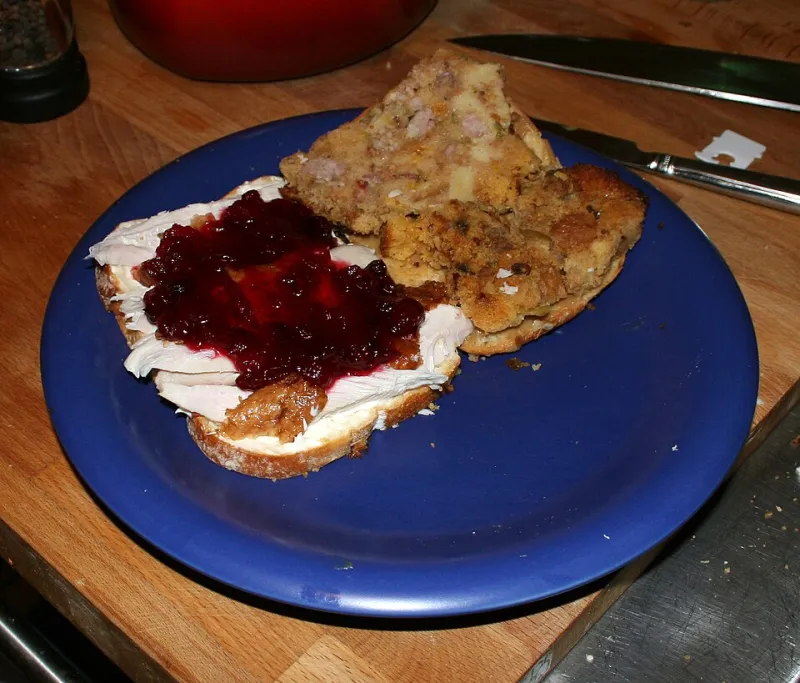
Photo: Marshall Astor, CC BY-SA 2.0, via Wikimedia Commons
It's November 27, 2026, and across the United States, refrigerators are groaning. Yesterday's Thanksgiving feast has entered its second act: the leftovers. This is the season of foil-wrapped mysteries, gravy that has developed a skin, and the quiet negotiation over who gets the last piece of pie. It is also a season that English has not properly equipped us for. So let's fix that.
Below are twelve coinages for the specific joys and miseries of leftover season. Each one follows a recognizable word-formation pattern—because even fake words should have real grammar behind them. At the end, you get to vote on which term deserves a spot in the dictionary. Democracy, but make it Tupperware.
The Words, Defined
1. Stuffing Fatigue
Noun. The point, usually around day three, when you cannot look at another scoop of stuffing without feeling personally attacked by bread. Formation: compound noun, stuffing plus fatigue. Modeled on compassion fatigue and email fatigue, which proves we love attaching fatigue to anything we're tired of.
2. Pie Shame
Noun. The guilt of eating the last slice of pie for breakfast and then telling everyone you had yogurt. Formation: compound noun with a strong modifier-noun pattern. Pie shame sounds like a real condition because English loves pairing a specific food with a broad emotion—see food guilt, wine regret, and snack anxiety.
3. Fridge Tetris
Noun. The spatial puzzle of fitting seventeen containers into a refrigerator that was clearly designed for one sad cucumber. Formation: metaphor compound. We borrow the name of a game and apply it to a non-game activity. Same pattern as laundry Jenga and email Whac-A-Mole.
4. Gravy Clock
Noun. The invisible timer in your head that tells you gravy has about forty-eight hours before it becomes a science experiment. Formation: compound noun with a concrete image. It works because clock implies urgency without requiring an actual clock.
5. Tupperware Archaeology
Noun. The act of excavating the back of the fridge and identifying containers by shape, smell, and hope. Formation: noun plus noun, with archaeology doing metaphorical heavy lifting. Like kitchen forensics or leftover cartography.
6. Leftover Fog
Noun. The mental haze that descends when you've eaten turkey, stuffing, mashed potatoes, and pie for three consecutive meals. Formation: compound noun using a weather metaphor. English adores weather words for mental states—brain fog, cloud of doubt, under the weather.
7. Cranberry Creep
Noun. The way a single spoonful of cranberry sauce somehow migrates across the entire plate, staining everything in its path. Formation: rhyming-ish compound with a horror-movie rhythm. Creep does the work of implying slow, unstoppable movement.
8. Mash Mountain
Noun. The intimidating pile of mashed potatoes that reappears no matter how many servings you eat. Formation: alliterative compound. English loves alliteration for playful coinages—mash mountain sounds like a theme park attraction and a threat.
9. Relative Roulette
Noun. The game of deciding which family member gets which leftover container, with all the diplomatic risk that implies. Formation: metaphor compound borrowed from Russian roulette, softened for family use. Use with caution at the holidays.
10. Second-Plate Syndrome
Noun. The compulsion to go back for a second plate because the food is already in the fridge and therefore technically available. Formation: compound noun with a pseudo-medical suffix. Syndrome makes any behavior sound official, which is half the fun.
11. Dishes Déjà Vu
Noun. The sensation of washing the same serving platter for the fourth time and wondering if you have died and gone to a very buttery purgatory. Formation: noun plus borrowed French phrase. Déjà vu already means a repeat sensation, so the compound writes itself.
12. Cooler Creep
Noun. The slow migration of a cooler from the garage to the kitchen to the living room because nobody wants to walk that far for leftovers. Formation: compound noun with a movement metaphor. Creep appears again because apparently it's the go-to word for slow, annoying motion.
What Makes a Fake Word Feel Real
Most of these coinages use compounding, which is English's favorite trick. We smash two existing words together and let context do the rest. Others use metaphor (Fridge Tetris, Tupperware Archaeology) or pseudo-medical language (Second-Plate Syndrome) to borrow authority. The best new words don't just describe something—they make you nod and say, yep, that's exactly it.
That's the test for leftover slang: does it save you a sentence? Fridge Tetris replaces a whole paragraph about cramming containers into a too-small space. Pie Shame replaces a confession. A good coinage is a tiny act of efficiency wrapped in a joke.
Cast Your Vote
Which of these twelve deserves dictionary status? The YouDict newsroom has no actual authority here, but we do have strong opinions and a group chat. Here's the shortlist, ranked by pure usefulness:
- Fridge Tetris — instantly understandable, visually funny, and useful from Thanksgiving through New Year's.
- Pie Shame — emotionally precise. Everyone has felt it. Some of us felt it this morning.
- Stuffing Fatigue — a great entry in the fatigue family. It practically comes with a warning label.
- Tupperware Archaeology — the most fun to say, even if the activity is disgusting.
Vote for your favorite in the comments, or just shout it at your refrigerator. The fridge has heard worse.
The Real Takeaway
Leftover season is a linguistic gap. We have words for the feast and words for the cleanup, but not enough for the strange, gray, gravy-scented days in between. These coinages won't all survive. Most slang doesn't. But the ones that stick will stick for the same reason all good words stick: they name something we didn't know we needed to name. Now go label your containers. Future you is watching.