Why 'Doorbuster' Sounds Like a Threat: Black Friday's Weird Word Secrets
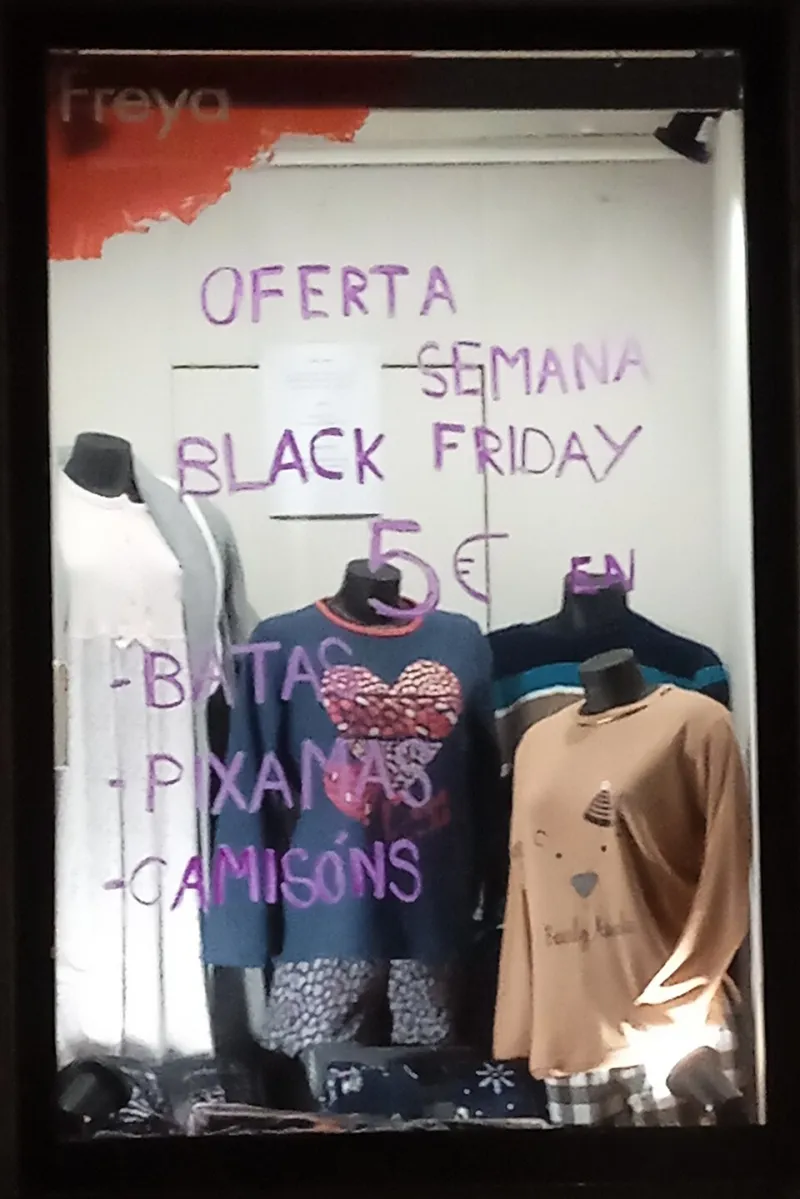
Photo: Estevoaei, CC BY-SA 4.0, via Wikimedia Commons
It is November 27, 2026, and the ads have already started shouting. DOORBUSTER. LOSS LEADER. BOGO. Black Friday has its own dialect, and most of us speak it fluently without knowing where the words came from. That is the strange thing about retail language: it sounds official, but a lot of it is theater with a price tag.
Why Is It Called Black Friday?
The tidy story is that Black Friday is when retailers finally move from red ink to black ink. It is a nice story. It is also, according to the common historical account, a later gloss on a name that started elsewhere.
The phrase is often traced to Philadelphia in the 1960s, where police and locals used 'Black Friday' to describe the traffic chaos and crowds the day after Thanksgiving. Retailers reportedly tried to rebrand it 'Big Friday' and failed. By the 1980s the name had spread, and the accounting explanation became a convenient way to make the day sound like a celebration instead of a traffic report.
That does not make the red-to-black story useless. It makes it a retrofit. Black Friday became a holiday by borrowing the language of profit and pasting it over the language of chaos.
Doorbuster: The Word Is Basically a Threat
Doorbuster is a blunt little compound: door plus buster. The retail sense is a deal designed to pull a crowd at opening, the kind that makes a store's front doors feel like a dam about to break. Dictionaries tend to date the retail use to the late 20th century, which is part of the joke. The word sounds old-timey, but it is basically modern retail panic in two syllables.
It also does a lot of unspoken work. A sale suggests a discount. A doorbuster suggests scarcity, speed, and the possibility that someone else will get there first. It is not really a word about saving money. It is a word about beating another shopper to the shelf.
Loss Leader: The Term That Sounds Like a Demotion
Loss leader is the retail vocabulary equivalent of a business school haiku. A loss leader is an item sold at or below cost to bring people into the store, where they will supposedly buy other things with healthier margins. The leader is the product that leads traffic. The loss is the money the retailer accepts as the cost of getting you through the door.
It is a real strategy, not just a fancy way of saying cheap thing near the entrance. The phrase has a clinical, slightly insulting sound, which is probably why it stays in the trade and rarely makes it onto a red banner. You will see the item. You will not see the phrase.
BOGO: The Acronym That Learned to Smile
BOGO began as shorthand for buy one, get one and then became a word people say out loud, boh-goh, without thinking about the grammar hidden inside. The come-on is deliberately fuzzy. BOGO can mean buy one, get one free. It can also mean buy one, get one half off, or buy one, get one at a smaller discount. The acronym is efficient, cheerful, and just vague enough to survive a lawyer's review.
That is not an accident. Retail language rarely wants precision. It wants momentum. BOGO is the sound of a shopper doing mental math and losing.
The Older Words Hiding in the Cart
Not every shopping word is a modern invention. Bargain comes through Old French and has been in English for centuries. Clearance has been used in English since the 16th century in the sense of clearing something out or away; its retail sense is later, but the word itself is not a Black Friday baby. Rain check comes from baseball in the 1880s, a ticket stub that let you come back to a rained-out game, before it became the thing stores offer when the doorbuster sells out. Even markdown is older than the doorbuster era, though its retail life is thoroughly modern.
Why the Vocabulary Works
These words are not just labels. They are little scripts. Doorbuster tells you to hurry. Loss leader tells the store's accountant to relax. BOGO tells your brain that math is happening, even when the math is mostly vibes. Black Friday itself is a name that sounds ominous and exciting at once, which is a useful thing for a shopping day to sound like.
The vocabulary is weird because it is doing several jobs at once: selling, explaining, and creating a story about why you need to be in line before sunrise. The words may be ugly. They are not lazy.
Quick Quiz: Which Shopping Word Is Older?
- Which term is older: doorbuster or rain check?
- True or false: Black Friday was invented by retailers to describe going from red ink to black.
- Which is older: bargain or BOGO?
- What does loss leader actually mean?
- Which word is a modern retail compound: doorbuster or clearance?
Answers: 1. Rain check, from 1880s baseball. 2. False, the red-to-black story is a later rationalization. 3. Bargain, by centuries. 4. An item sold at or below cost to attract shoppers. 5. Doorbuster.